

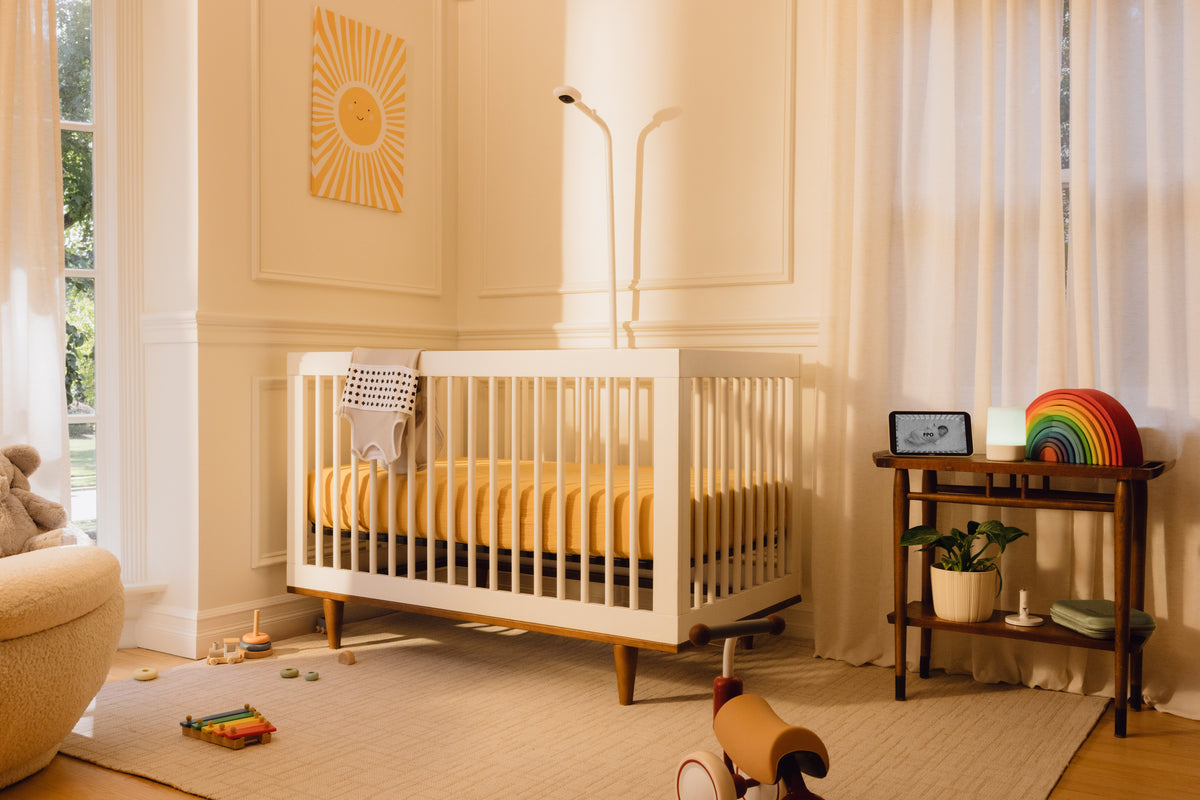
Tiny socks, soft baby blankets, adorable little outfits, and that stroller you've been researching for weeks. Building your baby registry is one of the most exciting parts of preparing for your little one's arrival.
But somewhere between choosing a crib and comparing baby monitors, you might find yourself wondering: How many items should actually be on a baby registry?
If you're expecting your first baby, it's easy to feel overwhelmed by the seemingly endless lists of newborn must-haves. Every website recommends something different, and well-meaning friends and family probably have plenty of suggestions of their own.
The truth is, you don't need every baby product on the market to feel prepared.
A thoughtful baby registry is about choosing items that suit your home, your lifestyle, and your baby's needs, rather than simply filling a list with as many products as possible.
Let's look at how many items you might want to include, which newborn essentials deserve a place on your list, and what you can comfortably wait to buy.
How Many Items Should Be on a Baby Registry?
There's no magic number that works for every family.
As a practical starting point, you might aim for around 40 to 70 different products or product types for your first baby. This isn't an official recommendation or a rule you need to follow. It's simply a way to organize your registry without making it unnecessarily complicated.
For example, eight baby bodysuits could count as one product category, even if you add several sizes or colors.
Some parents create registries with more than 100 individual entries, while others prefer a much shorter list.
What matters most is whether your registry reflects what you'll actually use.
Before adding another item, consider a few questions.
Is this your first baby?
If you're preparing for your first child, you'll probably need more equipment than someone expecting their second or third.
Parents who already have children may be able to reuse clothing, nursery furniture, and other baby essentials, provided everything is still safe and in good condition.
There's no reason to start from scratch if you already have products that work well for your family.
How much space do you have?
A large nursery can accommodate more equipment than a small apartment.
If storage is limited, prioritize compact, practical products and avoid buying too many bulky items before you know whether you'll need them.
For example, you might appreciate a foldable baby bath more than a large standalone model.
Which items are essential, and which are optional?
Some purchases are necessary from the beginning, while others are simply convenient.
A safe place for your baby to sleep is essential. An elaborate nursery decoration setup isn't.
Similarly, a baby monitor with a camera may be useful in your home, but it's not something every family needs immediately.
Try dividing your registry into essentials, helpful extras, and items you can purchase later.
Baby Registry Checklist: What Do You Need for a Newborn?
Organizing your registry by category makes it easier to identify what you've already chosen and what might still be missing.
The following quantities are practical starting estimates rather than strict requirements.
| Baby essential | Suggested starting quantity |
|---|---|
| Baby bodysuits | 6–8 |
| Sleepers or comfortable outfits | 5–7 |
| Burp cloths or muslin cloths | 8–12 |
| Crib or bassinet | 1 |
| Firm, properly fitting mattress | 1 |
| Fitted crib sheets | 2–3 |
| Wearable sleep sacks | 2 |
| Baby monitor with camera | 1, optional |
| Stroller | 1 |
| Infant car seat | 1, if traveling by car |
| Baby bathtub | 1, optional |
| Digital thermometer | 1 |
| Diapers | A small starter supply |
You don't have to purchase everything before your baby arrives.
Some products are easier to choose once you've learned more about your baby's preferences and your family's daily routine.
1. Nursery Essentials: Creating a Safe and Comfortable Sleep Space
Setting up the nursery is often one of the most enjoyable parts of preparing for a baby.
You might already have a color scheme in mind, a favorite crib picked out, or a collection of adorable decorations waiting to be displayed.
But before focusing on how the room looks, start with the essentials for safe sleep.
Your baby needs a suitable crib or bassinet, a firm and properly fitting mattress, fitted sheets, and appropriate sleep clothing.
The American Academy of Pediatrics recommends placing babies on their backs for every sleep, on a firm, flat, non-inclined surface, without loose blankets, pillows, stuffed animals, or crib bumpers.
Room-sharing without bed-sharing is recommended for at least the first six months.
Do You Need a Baby Monitor With a Camera?
A baby monitor isn't essential for every family, but it can be helpful when your baby is sleeping and you're in another room.
A video baby monitor allows you to check whether your little one is sleeping, moving around, or beginning to wake up without entering the nursery every time.
Some smart baby monitors also offer features such as night vision, sound notifications, and sleep tracking.
The Nanit Pro Camera, for example, allows parents to view their baby through the Nanit app.
With a compatible fixed overhead setup, Nanit can also provide automatic sleep tracking and additional sleep insights, depending on the available features and Nanit Insights subscription.
Medically Certified Breathing Motion Monitoring With Nanit
When paired with compatible Nanit Breathing Wear, such as the Breathing Band, a supported fixed overhead setup, and the Nanit app, the Nanit Pro Camera can also track your baby's breathing motion in real time.
As of September 2026, the complete Nanit Breathing Motion Monitoring System is CE-marked as a Class IIb medical device in the European Union, under the EU Medical Device Regulation (MDR 2017/745). The system has been independently assessed by BSI.
The certification applies to the complete system of compatible Nanit Pro Camera, Breathing Wear, app, and cloud infrastructure when used for its intended purpose.
The camera recognizes the specially designed pattern on the Breathing Band, without requiring electronic sensors or wires on your baby or inside the crib.
If no breathing motion is detected for more than 20 seconds, the system can trigger a Red Alert.
The medically certified breathing monitoring feature is intended for healthy, full-term babies aged 0–24 months. It is not intended for premature infants or babies with known respiratory conditions.
It's important to understand that Nanit cannot predict, detect, or prevent Sudden Infant Death Syndrome (SIDS). Medical device certification does not mean the system replaces adult supervision or recommended safe sleep practices.
In the United Kingdom, Nanit's Breathing Motion Monitoring System is also UKCA-marked as a medical device, independently assessed by BSI Assurance UK, and registered with the MHRA. These certifications do not constitute FDA clearance or approval in the United States.
2. Baby Clothes: How Many Outfits Does a Newborn Need?
Buying baby clothes is fun, but it's also one of the easiest ways to end up with more than you need.
Newborns grow quickly, and some babies barely wear newborn-sized clothing before moving into the next size.
Instead of filling an entire wardrobe with tiny outfits, start with a practical selection of bodysuits, sleepers, socks, and seasonally appropriate clothing.
For many families, six to eight bodysuits and five to seven comfortable outfits are reasonable starting quantities.
You may need more if you prefer doing laundry less frequently.
Think about the season when your baby will arrive, too.
A baby born in winter will need different clothing from one born during a hot summer.
Choose comfortable materials and clothing that's easy to open during diaper changes. You'll appreciate that convenience more than you might expect.
3. Feeding Essentials: Breastfeeding, Formula, or Combination Feeding
Your feeding plans will influence what belongs on your baby registry.
If you're planning to breastfeed, nursing bras, breast pads, and possibly a breast pump may be helpful.
If you're planning to formula-feed, you'll need suitable baby bottles, nipples, and supplies for safe formula preparation and cleaning.
Combination feeding may involve some of the same products.
One useful tip: avoid buying a large collection of identical bottles before your baby arrives.
Babies can have different preferences when it comes to nipple shapes and milk flow rates.
Starting with a small selection gives you the flexibility to find what works before investing in more.
4. Baby Gear for Traveling and Everyday Outings
A stroller, infant car seat, and diaper bag are among the bigger purchases many parents make.
When choosing a stroller, consider more than appearance.
Will it fit in your car? Is it easy to fold? Can you comfortably maneuver it on the sidewalks and paths you use most often?
For car travel, you'll need an appropriate car seat that meets applicable safety standards and fits your baby's size.
A diaper bag with spare clothes, diapers, wipes, and a changing mat can make outings more manageable.
You might also consider a baby carrier, provided it supports your baby's body appropriately and keeps their airway clear.
5. Bathing and Diapering: Keep the Basics Simple
You don't need an entire cabinet of skincare products to care for a newborn.
Start with diapers, soft washcloths, a safe changing area, a digital thermometer, and a baby bathtub if it suits your home.
Some families prefer a dedicated changing table, while others find a secure changing mat on a suitable surface more practical.
It's also worth avoiding a huge stockpile of newborn diapers.
Babies grow quickly, and different brands fit differently.
A smaller starter supply gives you time to find the right size and style.
What Baby Registry Items Can You Skip Until Later?
Not every product needs to be purchased before your due date.
Baby swings, extra toys, large bottle collections, wipe warmers, and certain nursery accessories may be helpful for some families, but they're not universally necessary.
You can often wait until you understand your baby's needs before deciding whether these products are worth buying.
The same applies to more expensive gadgets.
Ask yourself whether the product solves a problem you genuinely expect to have or whether you're adding it simply because it appears on another registry checklist.
Remember that a baby registry should make life easier, not create pressure to own everything.
Which Nanit Products Should You Add to Your Baby Registry?
If a smart baby monitor is on your list, it's worth thinking about where you'll use it and which features matter most to you.
Nanit offers different camera setups and accessories designed for different situations.
Nanit Pro Camera With Floor Stand
The Nanit Pro Camera with Floor Stand is designed for a fixed overhead view of your baby's crib.
This setup allows you to monitor your baby's sleep space through the Nanit app.
With a compatible configuration, automatic sleep tracking features may also be available.
Certain advanced sleep analytics and personalized insights require a Nanit Insights subscription.
When used with compatible Breathing Wear and the intended fixed installation, this setup also supports Nanit's medically certified Breathing Motion Monitoring System in the European Union.
Nanit Flex Stand
The Nanit Flex Stand offers a more portable way to use a compatible Nanit camera.
It can be helpful when traveling or when you want to move the camera between suitable locations.
However, the Flex Stand doesn't provide all the same features as a compatible fixed overhead installation.
In particular, Nanit's Breathing Motion Monitoring with the Breathing Band is not supported with the Flex Stand.
Nanit Breathing Band
The Nanit Breathing Band is designed to work with a compatible Nanit camera and supported overhead setup.
It features a specially designed fabric pattern that the camera recognizes to track your baby's breathing motion.
The band itself contains no electronic sensors.
When used with the compatible camera, app, and fixed installation, the Breathing Band forms part of the complete Nanit Breathing Motion Monitoring System, which is CE-marked as a Class IIb medical device in the European Union.
The certification applies to the complete system and its intended use, rather than the Breathing Band as a standalone medical measuring device.
How to Organize and Update Your Baby Registry
Your registry doesn't have to stay exactly the same throughout your pregnancy.
You may receive hand-me-downs from friends, discover a product that better fits your home, or decide that something you originally wanted isn't necessary after all.
Regularly reviewing your registry helps keep it useful.
A simple way to organize it is to divide your items into three groups:
-
Must-haves before birth: Safe sleep essentials, clothing, feeding supplies, diapers, and appropriate transportation equipment.
-
Helpful everyday extras: Products that can make certain routines more convenient.
-
Can wait until later: Accessories and equipment you may not need immediately.
If your registry platform automatically marks purchased gifts, check it occasionally to make sure everything is up to date.
If someone gives you an item separately, remove it from the list to avoid unnecessary duplicates.
And if you change your mind about a product, don't hesitate to replace it.
Your registry should reflect your family's needs, not the choices you made months earlier.
Frequently Asked Questions About Baby Registries
How Many Items Should I Put on My Baby Registry?
There's no required number. Around 40 to 70 different products or product types can be a practical planning starting point for first-time parents, but your ideal list may be smaller or larger.
When Should You Start a Baby Registry?
Many parents begin building their registry during the second trimester. This gives you time to compare products, research safety features, and make changes before your baby arrives.
What Are the Most Important Baby Registry Essentials?
A safe sleep space, appropriate clothing, diapers, feeding supplies, and an infant car seat for car travel are among the most important essentials for many families.
Do You Need a Baby Monitor for a Newborn?
Not necessarily. A baby monitor can be convenient when you're in another room, but it doesn't replace direct supervision or safe sleep practices.
Is Nanit a Medically Certified Baby Monitor?
Yes. As of September 2026, Nanit's complete Breathing Motion Monitoring System is CE-marked as a Class IIb medical device in the European Union. The certification applies to its intended breathing monitoring function with a compatible setup, not to every feature of the baby monitor.
Is It Okay to Buy Baby Items Secondhand?
Yes, many baby clothes, furniture items, and accessories can be reused if they're clean, complete, and meet current safety requirements.
Take extra care with car seats and mattresses. Their condition, history, and safety standards matter.
Should You Put Expensive Items on a Baby Registry?
You can. Some families prefer including a mix of affordable gifts and larger purchases so friends and relatives have different options.
If your registry platform supports group gifting, larger items may be easier for several people to contribute toward.
A Baby Registry That Works for Your Family
The best baby registry isn't necessarily the longest one.
It's the one that helps you prepare for your baby's arrival without filling your home with products you may never use.
Start with the essentials, consider your available space, and think about which products will genuinely make everyday life easier.
You can always add more later as you learn what works for your baby.
And if you're considering a smart baby monitor with medically certified breathing motion monitoring, take some time to compare camera placement options and the features available with each setup.
Explore Nanit smart baby monitors and accessories to find a solution that fits your nursery and your family's routine.
Nanit’s 2026 Report: The State of Modern Parenthood